 Main menu

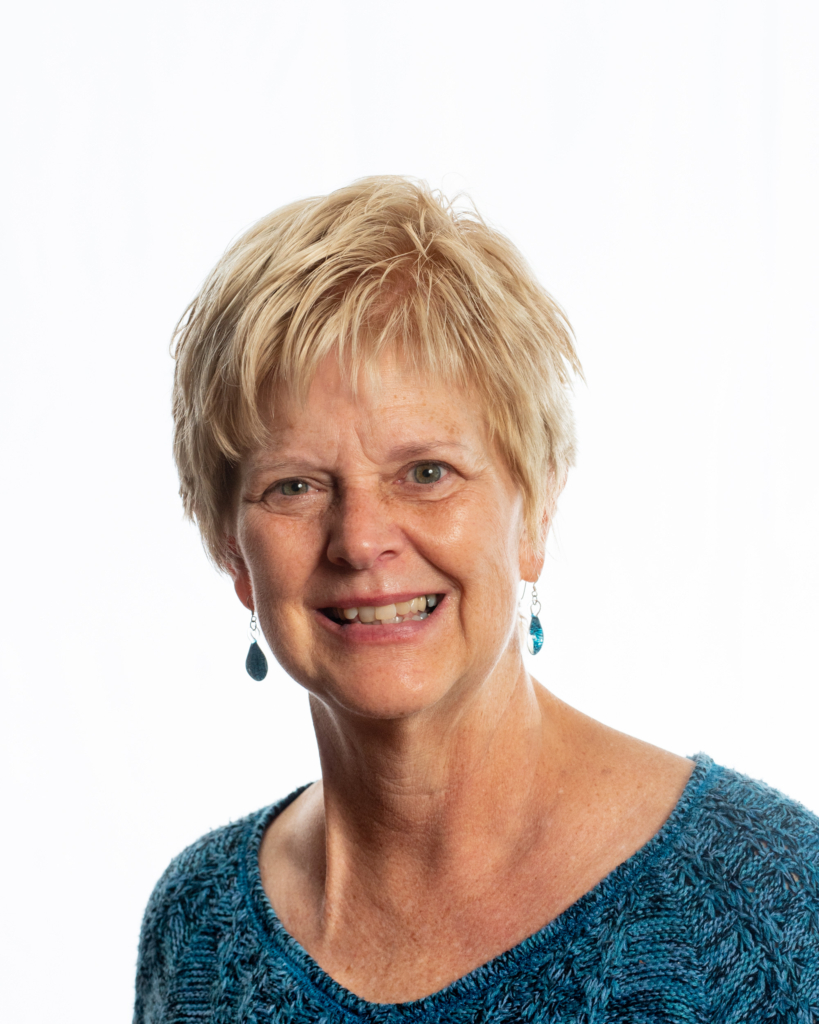


Written by Devon Cone
When I was diagnosed with young onset Parkinson’s almost ten years ago, I knew virtually nothing about Parkinson’s. As I began learning, I learned it could involve a tremor, stiffness, slowness, and the inability to control the movement of my body. I mostly focused on these visible things, the symptoms people might recognize.
In the last few years, I’ve become more aware of some of the quieter and less visible realities of Parkinson’s–things about Parkinson’s that don’t typically show up in awareness campaigns and don’t fit neatly into inspirational narratives. These are things that often go unnamed, even within the Parkinson’s community.
Here are some examples of these quieter aspects of Parkinson’s that feel important for me to say out loud this year.
In the Parkinson’s community, you hear lot about resilience and about staying active, positive, and engaged. I believe deeply in all of that: These methods of coping are some of the only ways I have felt like I still have some control over my own life. Both movement and mindset definitely matter.
But so does grief.
Parkinson’s is not a one-time loss. It is a series of recalibrations. You might lose the ability to run. Maybe you lose the confidence of speaking without stumbling over words. Perhaps your sleep will be impacted, or your ability to get dressed, to cook, and to eat without making a mess. For me, the scariest thing is losing the ability to think as I once did.
No matter what comes first, just when you adjust to one change, another arrives. There is a particular kind of grief in having to renegotiate your identity over and over again. These constant shifts you are forced to make are profound, and they are not always graceful.
We don’t talk enough about how exhausting this is, both mentally and physically. It is draining to repeatedly build a new version of yourself. Even if the outside world often sees strength in your resilience, it doesn’t see the taxing internal work of repeatedly letting go.
Over the past few years, I have become more aware of how much of Parkinson’s is invisible. Tremor, dyskinesia, shuffling, and slowness—these are all visible manifestations of Parkinson’s. But apathy, depression, embarrassment, and an eroding of confidence? Those are harder to point to.
I have come to understand the way stress amplifies symptoms, and I have noticed the mental effort it takes to do things that used to feel automatic. These days, I have to constantly calculate: When was my last dose? How long until the next one? If I take my medication now, will it kick in at the right time so that I can accomplish what I have planned? Or will the side effects get in the way and make what I am trying to do impossible?
From the outside, I may look fine. On the inside, I am managing a complex neurological equation. The cognitive and emotional labor of living with Parkinson’s is rarely visible. And because it is not visible, it is often underestimated.
Money. We rarely talk about it directly, but it often feels especially urgent for those of us diagnosed young. We talk about medication costs and insurance battles. Those are real, too. But we do not talk enough about the deeper financial tension of young onset Parkinson’s: the need to take care of yourself physically while also taking care of yourself financially.
I was diagnosed at 35, far from retirement age, and I had no spouse to rely on. I was in the middle of building a career, not winding one down.
Parkinson’s did not arrive at a natural pause point. It abruptly interrupted an upward trajectory in my life. I was dedicated to my career and had already sacrificed a lot to get to where I was. I loved my job; I still love my job. But before I was diagnosed, I felt excited about where my work was headed and how much time I had to grow in my career. Parkinson’s changed all of that.
Many of us living with Parkinson’s need to scale back our work hours to manage symptoms. After more than nine years with Parkinson’s, I recently moved to working part-time because my body simply could not sustain full-time work.
The decision to reduce my time and responsibilities was about my health. But in the United States, working part-time often means losing employer-sponsored benefits—including health insurance.
Think about this: I live with a progressive brain disease for which I need consistent medical care, and there is a long list of actions I should take every day to manage my condition. However, because I reduced my hours for this health reason, I lost my health insurance. It does not make sense. Yet it is the reality.
When insurance is tied to employment and disability systems are complex, contradictory, and generally adversarial, we are not only managing symptoms, we are managing entire systems. To be honest, it is infuriating.
It forces me to have quiet calculations running in the background of my daily life: How much can I work without worsening my symptoms? How do I maintain health insurance if I cannot work full-time? How do I save for a future that will no doubt include higher medical costs and lower earning power?
And layered on top of that is a strange dual task: To access long-term disability benefits or workplace accommodations, you have to document what you cannot do. And then, sometimes even in the same day, you have to–even if only for yourself–demonstrate competence and resilience and show that you can still lead meetings, take on projects, and perform.
It can feel like living in two opposing narratives at once. I am limited—and I am capable. Holding those truths together is overwhelming and often costly.
This may be the most insidious part of this Parkinson’s. It definitely is for me. Symptoms are one thing, identity is another.
I used to be optimistic, and excited about the future. I was deeply happy for the good fortune of people around me. I was quick with everything: I was quick to respond, quick to move, and quick to work. I talked fast, walked fast, and even thought fast. I loved challenging myself physically and intellectually, and I was ambitious.
Not anymore.
Slowness is not just physical. It seeps into how you experience yourself. When your body hesitates, your words do not come as easily, or fatigue dulls your edges, it can feel like the best parts of your personality are fading. There are days when I feel far from the person I once was, and I hate that.
I haven’t lost all my joy, but the texture of my inner life has shifted. Am I less optimistic, or am I under-medicated? Am I less driven, or are my body and brain tired? Given that dopamine shapes mood, motivation, and energy, and that those of us living with Parkinson’s have less dopamine, it becomes difficult to separate symptoms from self. This isn’t just about what you can do: It’s about who you feel yourself becoming.
Living with Parkinson’s often means facing big medical decisions, including new medications, clinical trials, lifestyle tradeoffs, and even surgical interventions.
These decisions carry weight, not just for today, but for years down the line, sometimes even permanently. And while we might be surrounded by doctors, researchers, and loved ones, the ultimate responsibility and consequences of these decisions, sit with us. There’s loneliness in that. We don’t talk enough about how heavy that can feel or about how courage and fear can coexist in the same decision.
In the past year, I’ve felt more acutely how isolating it can be to weigh risks and benefits that affect my body, independence, and future. This is especially the case since there is so little research into the experiences of women with Parkinson’s. Being a woman with young onset Parkinson’s amplifies the loneliness of decision-making even more.
One thing I’ve noticed in the broader narrative around Parkinson’s is the pull toward inspiration. That makes sense because inspiration is powerful and we all need it to help us stay motivated. Stories of resilience are necessary and real. Exercise programs change lives, and potential research advances give hope. But sometimes, the pressure to be inspiring can feel constraining.
Some days, I don’t want to be brave. I don’t want to be a symbol of perseverance. I just want to be a person navigating a really tough chronic illness.
In this Parkinson’s community, in which we share and can be uplifted and encouraged by others, we need to ensure that there is room for the full spectrum of experiences. We need to acknowledge both strength and frustration, gratitude and anger, acceptance and resistance. Parkinson’s is not a tidy story; it’s an ongoing, messy one. Allowing space for complexity doesn’t diminish hope. Sometimes it might even deepen it.
Finally, there is fear. I imagine everyone living with Parkinson’s feels this. We fear progression, losing independence, becoming a burden, financial instability, and even becoming someone we don’t recognize.
I think we sometimes don’t express these fears out loud because we don’t want to give them power. We’re trying to stay focused on what we can control. Or we don’t always name these fears because we don’t want to worry the people who love us. But acknowledging fear doesn’t show we’re weak; it proves we’re honest.
Since I have made my diagnosis public in the past year, I’ve realized that the Parkinson’s community holds a tremendous amount of unspoken courage. It is courage that shows up quietly, in daily routines.
There is no sugar-coating it; Parkinson’s can be intense and scary. The only real choice is to have courage, which is not the absence of fear, but, rather, the facing of fear and continuing on as best as we can anyway.
When we speak honestly about what life with Parkinson’s actually involves, we create room for others to recognize themselves in the stories we share. Naming grief makes it less isolating. Naming financial stress makes it less shameful. Naming identity loss makes it less confusing. Talking helps people feel less alone.
At the same time, there is a truth that is harder to admit: Talking does not change the reality we are in. It doesn’t restore lost health insurance. It doesn’t rebuild a social safety net. It does not reverse disease progression or return the version of ourselves we once were. But it can make the stakes clearer.
If we are open and honest about the things I describe above, then we can advocate more effectively—for better policies, better support structures, and research that moves more quickly. Parkinson’s is the fastest-growing neurological disease in the world. Research matters. Advocacy matters. Exercise matters. But honesty matters too.
Living with Parkinson’s is not just about resilience, productivity, or inspirational stories. It is also about uncertainty, trade-offs, and learning to navigate a life that does not look the way we expected or wanted. My hope is that we keep building a community where participation, honesty, and nuance are valued just as much as positivity and performance. A place where people can tell the whole truth about living with Parkinson’s, not just the highlight reel of when they are at their best.
Conversation alone won’t solve the challenges of Parkinson’s, but silence certainly won’t either. So I hope that we in this community keep writing, talking, filming, and sharing the whole messy story. Not because words fix anything, but because they are often where understanding and change begin. And we need change, urgently.
Gene Rankey’s 2026 Parkinson’s Awareness Month Post


 Search




 Donate
 Find Support